Showing posts with label amtrak. Show all posts

Wednesday, February 15, 2012

Amtrak California quietly gets better

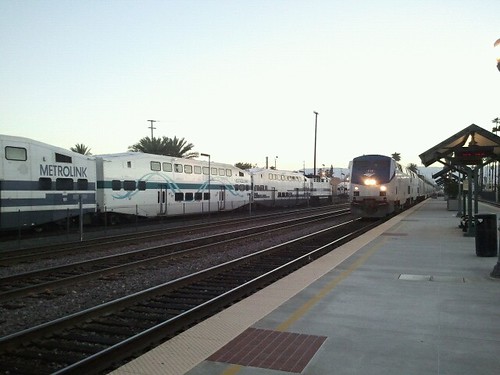
Apparently, this happened with the release of the latest Amtrak California Timetable on December 5th, but I didn't notice until I was down at the Riverside Metrolink over the weekend. Amtrak has started operating a Thruway bus connection between the Coachella Valley and Fullerton (connecting to the Surfliner for Santa Barbara, Los Angeles, Orange County and San Diego), with stops in Indio, Palm Springs, and Riverside. This is a daily service, so here's a new option for car-free travel outside of Riverside even on weekends. This bus is pick-up-only westbound to Fullerton, where it is drop-off-only, and pick-up-only at Fullerton eastbound, after which it is drop-off-only.

You can get tickets for this bus by making a prior reservation via Amtrak's web site or by calling 1-800-USA-RAIL, and either getting those tickets in the mail or picking them up at the Metrolink station. None of the Coachella Valley stations have ticketing available, but passengers may board the bus without prior reservation on a space-available basis, so long as they carry a photo ID. (The ID will be held by the driver, and will be returned when you pay for your passage in Fullerton. A similar system is used on the San Joaquin buses in Bakersfield.)

Here's a quick overview of the schedule, in which I also include connections to points south (which are valid, but not included in the official schedule.) Service is also available to La Quinta, Palm Desert, and Cabazon (Morongo Casino). You can find more information from Amtrak California's web site. Remember that train connections are required to take these buses, so they are only valid for trips to/from Fullerton (ie. no bus rides from Riverside to points east, or from points east to Riverside).

Westbound:


Bus #IndioPalm Springs AirportRiversideFullertonConnecting Train #Dest.
496908:0509:0010:2511:21769LA 12:10


572SD 13:55
4985--15:1016:2517:25785LA 18:55


784SD 19:59


Weekdays Eastbound:

Connecting Train #Dest.Bus #FullertonRiversidePalm Springs AirportIndio
768LA 09:40


769SD 09:27496811:5012:4013:50--
784LA 17:10


583SD 14:55498418:2019:0520:1521:15

Saturday, December 17, 2011

Connecting California

... in more ways than one. California's state-supported Amtrak routes, which I've mentioned before, provide a fantastic, hassle-free way to get around our state. Combined with their dedicated, guaranteed bus connections, there is pretty much nowhere of any significance in California that is out of the reach of the Amtrak California system. (And yes, the bus connections are *very* good. They generally use clean, comfortable coaches, and they will wait for the train if it's late. The train will also wait for a late bus.) Few people that I talk to in daily life know about this system, and I'm always asked "Did you drive or fly?" when I'm in the Bay Area, but it is a great way to move about the state.

And it just got better. Amtrak has announced that it has deployed free wi-fi across all three state-supported train routes. While business-class passengers on the Pacific Surfliner have long had access to the Internet, now passengers in coach on the Surfliner, as well as riders  in both classes of the Capitol Corridor and aboard the single-class San Joaquins can also enjoy Internet access as well.

The technology used by the system, which Amtrak calls AmtrakConnect, is cellular-based. During my trip this summer, I had the opportunity to use the wi-fi aboard the Cascades and Downeaster (before the latter hit a truck). The service is a bit more reliable than tethering a cell phone, as it will use whichever provider has a stronger signal in that area. (The difference in rural areas between my provider, T-Mobile, and Verizon is pretty significant.) It's not going to win any speed awards, but it's plenty to use for e-mail, Facebook and other general web browsing.

The trend of transportation providers offering free wi-fi is an exciting development. On the East Coast, low-cost bus providers have been offering Internet access for some time. (Also, many Crucero bus routes in the southwest offer such access.) One of the benefits of taking either transit or intercity ground transportation is that your time in transit isn't simply wasted looking out the windshield. Seeing providers recognize and capitalize on that is a hopeful sign for alternative transportation.

Thursday, November 17, 2011

The Transportation Toolbox

I alluded to this post in my earlier Declaration of Independence- from the car, that is. I want to talk about the versatility of the automobile, and the choices people make about transportation often without thinking about them. I want to do this by looking at what a typical auto addict's transportation toolbox, and how it compares to a more balanced one. (Spoiler alert: I'm going to use mine for the "more balanced" column.)


Auto Addict's Transportation Toolbox:

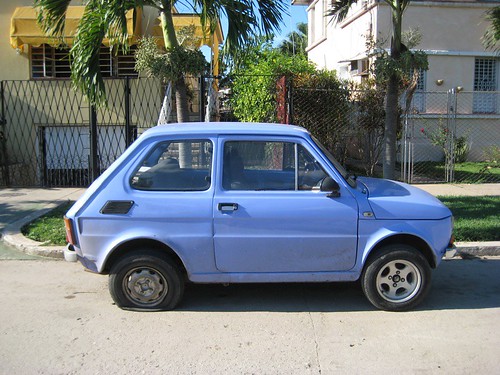
A little car

Automobile. 
Used for: The vast majority of trips, from the corner store to the daily commute to the occasional cross-country road trip.


Airplane
Aircraft. 
Used for: Moving people for most long-distance trips, generally around a thousand km and up.

Not a lot of diversity here. Now, granted, a lot of people will engage in a walk from time to time, and there are quite a few recreational hikers and cyclists out there... but, for pure transportation, this is roughly what many Americans' lives look like, especially in suburbia- and especially for what used to be called "the middle class."  The design of many tract developments especially almost necessitates a toolkit that looks like this, as it often walls people off from walking, cycling and taking transit. Furthermore, for long-distance transportation, many are entirely unaware of our national rail system and (despite encouraging changes in the northeast and in Chicagoland) disinclined to use long-distance bus service.

Let's now take a look at what my transportation toolkit looks like. Now, I'm not saying I'm perfect, but it should be clear that an awareness of one's transportation options allows a better matching between the job at hand and the tool used to do it.

Car-free Transportation Toolbox:

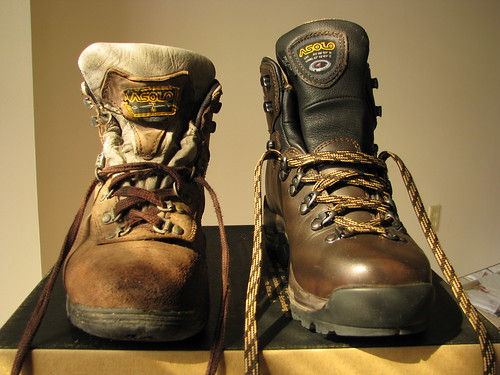
Old friend, new friend

Walking.
Used for: A small number of very short trips, often with company. Honestly, I don't walk too much, but I do on occasion. As I've mentioned, we have a fairly nice shopping centre within five minutes' walk of our apartment, and so sometimes the wife and I will walk there for shopping or a nice dinner.

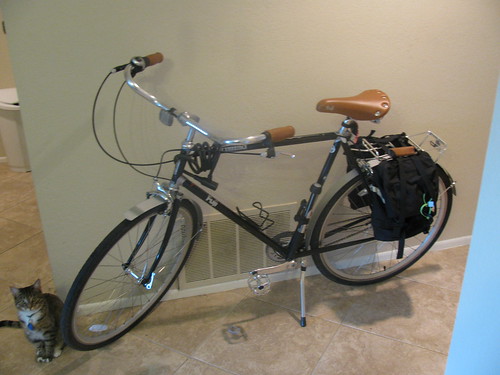
New Bike
Bicycling.
Used for: Most trips within a 10 mile radius that I take alone, including moderate cargo hauling. My bike is my go-to transportation tool, and serves the majority of trips I take. You'd also be amazed at the amount of cargo I can haul on the back, with nothing more than panniers and a rear rack. (I'm drooling over the amazingly versatile Burley Travoy trailer, but haven't plunked down the money yet.) Sadly, my wife is difficult to coax on to the back of a bicycle, so it's rare that we pedal places together.

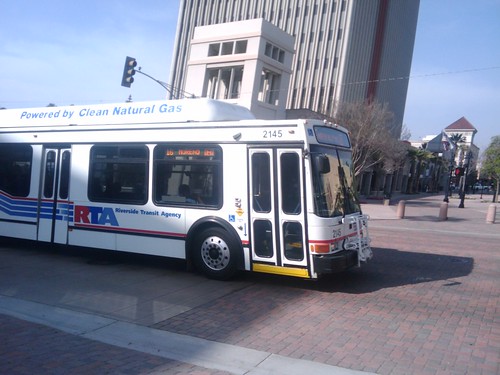
2010-03-25 16.01.30
Local Bus.
Used for: A lot of around-town trips, especially during inclement weather, as well as some longer-distance trips that would be difficult to manage on a bicycle. I also used the RTA to haul food for 80 Occupiers downtown earlier, so it's occasionally useful for certain specialized types of cargo. I can also, occasionally, manage to get Dani on to a bus, so we've been known to go out together via transit.

2010-12-06 08.53.05
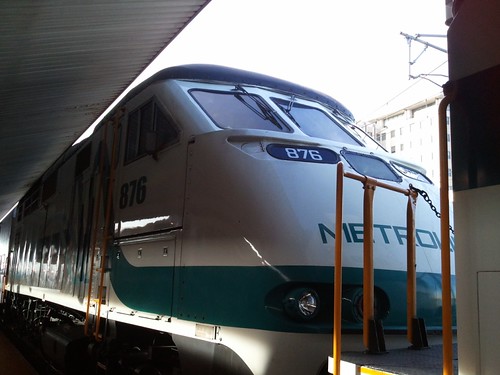
Commuter Rail.
Used for: Pretty much every trip I make to LA or Orange County (though I sometimes use the bus to the OC). Also occasionally the first step in longer-distance rail trips, leaving from LA Union.

 Scooter!
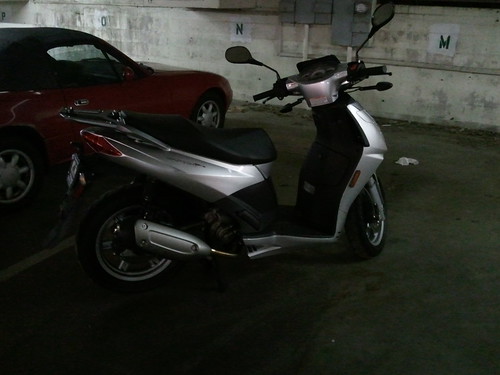
Scooter.
Used for: Most trips my wife makes, along with a lot of trips that the two of us makes. It will haul the both of us, and not a whole lot more, so it's not generally used for more than light shopping.

Zipcar Zip Zip!
Zipcar.
Used for: Shopping trips, mostly. It's also a great backup when one of us has the scooter and the other one *has* to get somewhere quickly, or when we were dealing with car breakdowns.

FlickrDroid Upload
Long-distance Rail.
Used for: Any long-distance trip that it makes sense for, including my 30-day 25-state 4-province Amtrak trip. Travel by train is my favourite way to travel- especially if I can afford sleeper.

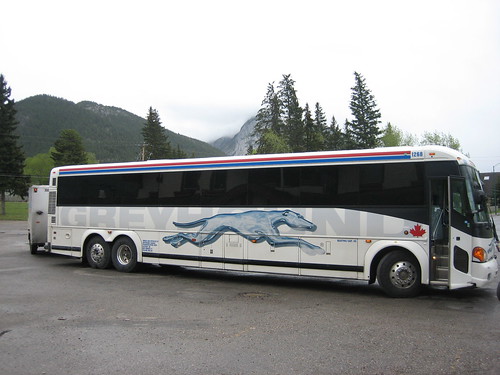
Greyhound Bus
Long-distance bus.
Used for: Trips where the train can't hack it. Sometimes, I use Greyhound as a supplement to Metrolink and other intra-regional services. Other times, it's used for long highway trips. One must be careful when trying to take the Hound to Vegas.


Airplane

Aircraft.
Used for: Long-distance domestic trips where time is a factor, as well as international trips (which I haven't taken enough of...).

Once you get away from the car-centric paradigm of transportation, a whole range of transport options opens up to you- and it's important, for all of the reasons that readers of this blog already know, that we restore balance to our transportation system.

NOTE: The photos of the car, ZipCar, airplane, Greyhound bus, and hiking boots are not mine. They are used under Creative Commons licensing, and the photographers are credited in the alt text.

Sunday, September 4, 2011

Reminder- No Labour Day Bus Service!

Best of luck getting to those barbecues, folks. There will be no bus service on Labour Day- which is tomorrow, Monday the 5th. Both RTA and Omni are shut down. Riverside Special Transportation (for seniors and the disabled) is also not running. Metrolink is only operating the Antelope Valley Line, on a special holiday schedule. OCTA and Metro will run on holiday schedules, while Foothill will run on a weekend schedule.

If you need to get around Riverside, the bike lanes will be open. You can also pick up a ZipCar at UCR, if you can snag a reservation. Riverside's three cab companies are available at:


CompanyTel.
AAA Inland Empire Cab1-888-333-TAXI (8294)
Yellow Cab Riverside951-286-6666
Happy Taxi951-781-TAXI (8294)


For inter-city transportation, Greyhound serves San Bernardino, Claremont, Santa Ana, Anaheim and LA. Amtrak also has one train daily to LA, leaving at 5:53am from the Riverside-Downtown station (south platform, over the bridge) and returning at 8:03pm.

Good luck!

Monday, June 20, 2011

Blog-cation

As you read this, my wife and I are on our way to Los Angeles Union Station for the start of what we're calling Epic Train Trip. We're touring the United States and Canada for the next month via Amtrak, with a smattering of Greyhounds and ferries in between. Accordingly, this blog will be a bit quieter. I do plan on posting interesting observations about transit in the cities we travel to, but I won't commit to a regular posting schedule.

Don't despair, however! Although I'll cut back on the blogging here, the wife and I will be chronicling our adventures on our travel blog, Backpack Amtrak. If you're interested, you can enjoy our adventures around the country on a train (and a shoestring budget) over there.

Monday, February 28, 2011

Bundu Bus?

I've lamented previously on the blog about how truly awful intercity transportation is out here on the West Coast. Trains are daily, if you're lucky, and Greyhound has its limits. The quirky and cheap Chinatown lines that ply their trade between every Northeastern city do exist here in CA, but as only a pale shadow of their Yankee cousins. And if you're car-free and want to visit some of the vast natural wonders that dot our region? You can do Yosemite with a little planning, or buy an expensive package deal with the Grand Canyon Railway, but that's about it.

So imagine my surprise when I put in an LA-SF itinerary in Google Transit (to take a look at the route of the Coast Starlight, and its relation to the coast) and Google spit out a handful of bus trips as well! The service was labeled as "Los Angeles to San Francisco," and Google said it was provided by Bundu Bus. Of course, I clicked on the link.

It seems that a tour operator, Bundu Bashers, has started providing bus service between major cities in the West and- this is the amazing part- the various national parks in the region. They serve Yosemite, the Grand Canyon, Bryce, Zion, Arches, Monument Valley, and even Yellowstone. They say that their full system only operates during the summer travel season (April 15-September 30), but even their reduced system serves all those places above, along with Los Angeles, Las Vegas, Salt Lake City and Phoenix. Fare is $52 LA-SF, which is in line with what you'll pay on Amtrak, but the trip is somewhat quicker.

One of their better deals, which I'm suddenly terribly interested in, is the "Hop-On Hop-Off" pass, providing unlimited travel on their system for 4, 7, 14 or 30 days. I may just spend some time soon flitting about the southwest on Bundu Bus. It's also really cool to see places like West Yellowstone, MT on Google Transit.

Downtown LA terminal is at 8th/Maple. Take the Metro 733 from Chavez/Alameda to 8th/Main, walk east one block and south one block.

Wednesday, October 20, 2010

Vegas Travelogue, Part 2

I mentioned in the first part of my travelogue that there's no good way to get to Vegas. Today, I'll go over what happens when you take the bad way to Vegas- private automobile on I-15. On the way out there, I picked up my wife at the school where she works (in Magnolia Centre) at 3:00. By the time we hit the CA-91, traffic was already stop-and-go. From Central Ave. to the split with CA-30 (approximately 14 miles and an agonizing half an hour), we were lucky to crawl along at a speed which caused our speedometer to register. After that point, we were largely in the clear until entering Las Vegas itself, where local traffic at the I-15/NV-215 interchange caused some slowing. Of course, the entire drive was characterized by that unique combination of interminable boredom and constant vigilance that marks any long-distance road trip, and it was 4 and a half hours in which I could have been making valuable progress on course readings but was instead staring at asphalt ribbons across salt flats.

I should note that this sort of traffic pattern is particularly problematic for the DesertXPress HSR plan- attentive readers will note that the first phase of the project is planned to terminate in lovely Victorville, CA, notably past the point where we encountered traffic. Angelenos that have to work until 5pm will find the drive across the LA basin to I-15 even more problematic than us IE types, especially since we left at 3pm. Unless DesertXPress is connected to some form of transit infrastructure, it will offer only minimal traffic relief for many. (I can envision a future in which the HSR is fed by both a giant parking garage and San Joaquin-style bus connections to points around the LA metro region, until the Victorville-Palmdale-LAUS connection is constructed. That might work out.)

On the way home, traffic was something other than smooth sailing. From just past the urbanized area of Las Vegas all the way to Primm (the state line), traffic was at a virtual stand-still. It took us over two hours to traverse 25 miles- I quite literally could have biked it faster. Worst of all, there was no discernible reason for the congestion- the road was littered with "Road Work" signs, but we never saw a single road worker, let alone anything that could be described as "working." There was also no evidence of a traffic collision- if such a crash occurred, it did so long before we went through. Because of the sheer volume of traffic on the route, and the lack of alternate routes, traffic conditions remained poor throughout the drive, and there would be random stoppages every so often along the way. The California Agricultural Inspection checkpoint- normally a 5 minute nuisance- took more than half an hour to clear. What was a 4:30 drive on the way out was nearly 8 hours on the return trip. That sort of unpredictability is an inherent problem of an automobile system that is over capacity, and one that desperately screams for alternatives. We need some other way to get out to Vegas. We need to create a class of people who no longer have to care about traffic congestion- and for that, we need an exclusive transitway of some kind, either busway or rail. And we need it yesterday.

In the next instalment, I'll cover my experiences with transit in Las Vegas itself.

Tuesday, October 12, 2010

Vegas Travelogue, Part 1

There is no good way to get to Las Vegas from Riverside. There used to be- Amtrak's Desert Wind once made daily departures from Los Angeles to Las Vegas and eventually Salt Lake City, where it was combined with the California Zephyr and continued on to Chicago. It moved from daily to thrice-weekly service in 1993, and was finally killed in 1997, and this is a travesty, because it leaves Vegas as the largest city in the West without any form of passenger rail service (unless you count casino trams and the nearly-bankrupt private Las Vegas Monorail), and it leaves thousands of Sin City-bound travellers stuck in unpredictable and interminable traffic on I-15 across the vast Mojave desert.

When planning a trip to Vegas for a friend's wedding last Sunday, I looked in to the alternatives. I really tried hard to find something, anything that would allow me to avoid driving the 15 all the way out there. Here's what I found:

GoToBus.com, via USAsia, Futura and ALT
GoToBus is a site that aggregates a great number of "chinatown" bus companies that provide service along major intercity corridors across the country. They're especially popular in the Northeast, where service can be as frequent as half-hourly along I-95, and the buses run 24-7. They do offer service from two providers that ply I-15 between LA and LV. The problem? I had to return on a Monday, and the bus companies only provide substantial service on Friday, Saturday and Sunday. Also, they leave from Los Angeles, not anywhere nearby. One provider leaves from Orange and another from Anaheim, but these schedules are even more limited.

For those who are very flexible in their travel dates and times, you can snag a ride to Vegas for around $50 R/T pp.

Las Vegas Express Bus
Another "chinatown" line, this company provides daily LA-LV service for $45 R/T pp. Once again, they depart Los Angeles and the San Gabriel Valley, not anywhere in the IE, but the daily nature of their service makes things a little more flexible. Why didn't I use this method of transport? Well, they don't advertise well- I only became aware of their existence because I saw one of their buses on the road while driving home. I'll keep it in mind for my next trip, and you should as well.

LuxBus America
LuxBus provides, as the name suggests, luxury motorcoach service to Las Vegas from LA and Anaheim daily, for $99-$120 R/T pp. The complimentary drinks and snacks onboard during the 5 hour journey sound enticing, but the ride was just too rich for me. Also, they leave out of Anaheim's main bus terminal, which is not exactly easy to get to from Riverside.

Greyhound
The 'Hound, America's primary provider of intercity bus service, is the only provider that operates direct service between Las Vegas and Riverside, to my knowledge. Trouble is, Greyhound doesn't guarantee that you get a seat. On a select few routes back East, you can buy a guaranteed seat for $5, but here you have no such option. If you're travelling at off-peak times, this isn't a worry for you, but if you want to get to Vegas on a Friday night, good luck. It may well be more of a "Saturday morning."

And those are your ground transportation alternatives from SoCal to Las Vegas. Sadly, none of them worked out for my wife and I last weekend, so we were forced into our car for the journey across the sands. More on that later.

Friday, July 9, 2010

California Low-Speed Rail

There's been a lot of controversy in the news about the coming California High-Speed Rail system, which you all can follow over at the CA-HSR Blog. The detractors insist that this system will be a "boondoggle" of epic proportions, running empty trains because Californians will simply not leave their precious automobiles, and we should instead focus on building more highway lane-miles on I-5 and CA-99 for our intrastate transport needs.

One thing that doesn't get said enough is that California ALREADY boasts a successful intrastate rail infrastructure. To get an idea of rail ridership in the state, we should look at the trains that are already running here, today. With that in mind, let's take a look at Amtrak California, the partnership between Amtrak and Caltrans' Rail Division that runs trains throughout the state.

The most familiar Amtrak California route to Riversiders and Southern Californians is the Pacific Surfliner. It runs from San Luis Obispo to San Diego, though not all trains travel the entire route. And it is a WILD success- the Surfliner is the third-most-travelled train in the Amtrak system, and the most used outside of the Amtrak-owned Northeast Corridor (which runs from DC to Boston). The trains get so full that during heavy travel seasons, Amtrak California requires reservations, and even then often pulls in idle trainsets from either Coaster or Metrolink to provide additional capacity. (I wish I had gotten a photo of the Coaster trainset running relief for the Surfliner at Irvine the last time I saw it.) It travels with a station-to-station average speed of around 45 mi/h, making it very competitive with cars during rush hour, and positive train control technology (due to be installed on all SoCal railroads in short order) will improve the running speed of the line dramatically. In Orange and San Diego counties, which utilize Automatic Train Stop technology, the Surfliner can already break 90 mi/h track speeds. With substantial infrastructure improvements, 60-70 mi/h average speeds are not out of the question.

The Capitol Corridor route in Northern California is a similar success. It is the fourth-most-travelled train in the Amtrak system, just behind the Surfliner. Running from San Jose to Auburn, though once again not all trains run the full route, it provides a quick, quiet and comfortable ride between the two metropolitan areas. The Capitol Corridor is slightly unique, because commuter passes are available for the service, and many do use the train as a commuter rail system, but it is still an excellent example of intercity rail done properly.

Last, we come to the red-headed stepchild of the Amtrak California system, the San Joaquins. Southern Californians will be familiar with this route as "the train that only goes to Bakersfield... then you have to take a bus." Despite its poor standing among Angelenos, the San Joaquin is the fifth-busiest train in the Amtrak system, behind the Capitol Corridor. The primary ridership for this train is between the various cities and towns of the Central Valley, and from the Central Valley to the Bay Area, and ridership abounds indeed. All 12 of the daily departures are reserved trains, year-round, and I can testify from personal experience that it is often difficult to find a seat. On my last trip to San Francisco, there were two empty seats in my car for much of the journey, and I have seen times when people have been forced to ride in the Cafe Car because none of the conventional seating options were available. All of this is happening despite long bus connections and relatively high fares- if you book soon enough, it's often cheaper to fly than take the train.

So what lessons are we to take from California's already expansive conventional rail system? Well, for one, Californians are happy to ride trains. They're clamouring on to those routes that we already have, even in car-dependent Central Valley rural areas and Orange County. And it is important to keep in mind that none of these routes serve the big travel market- Los Angeles to San Francisco. Only one train per day offers a 100% rail ride on that route, the Coast Starlight, and it does so unreliably and slowly. I don't doubt that, if the San Joaquins actually ran to Los Angeles via the Tehachapis, we would have a very different opinion about them than we currently do. Also, there is NO intercity rail service to San Francisco at all- all train passengers bound there have to change to a bus at Emeryville. Amtrak has a ticketing office at the Ferry Building in San Francisco, which is notable because it lacks any sort of train tracks nearby, excepting the F Market & Wharves trolley service. A high-speed rail service that serves the San Joaquin route, via the Central Valley, and then actually goes to San Jose, San Francisco and Los Angeles will be an unparallelled success.

Rail detractors will counter that all three of these routes enjoy public subsidy, and that is true. However, as readers of this blog know, so do automobiles. VTPI estimates that highways are subsidized at around 50-60%, and this doesn't include the subsidies that go into gasoline extraction and production, or automobile construction. The Pacific Surfliner is subsidized at 37%, well below highway subsidies. Rail critics demand that trains make money while they don't mind that automobile infrastructure bleeds money from our public purse like a sieve. I don't have the expertise to know that the CA-HSR system will make an operating profit, though there are credible studies that suggest it will. I do, however, know that it will shuttle Californians around the state using clean energy, reducing greenhouse gas emissions, and encouraging dense, walkable development, all while saving the government the cost of constructing yet more highway and airport infrastructure, and it might even bring redevelopment of struggling Central Valley downtowns. It will also probably destroy the short-haul LA-SF airline market, saving the environmental degradation that those constant daily flights cause. High speed rail is a good deal for the people of California, and it needs to be built as quickly as possible.

Wednesday, March 31, 2010

Travellin' Car-Free

The Western Political Science Association's annual conference is in San Francisco this year, so I'm heading up there for a bit of conference and a bit of vacation. As is our custom, the wife and I are travelling car-free: we got up this morning, caught the 16 to the Metrolink station, and grabbed Amtrak California bus #5415 to Bakersfield. In Bakersfield, we caught Amtrak San Joaquins #715, and I'm posting this as I watch dairy farms and fruit trees slip away out the window. When we arrive in Richmond, CA, we'll simply walk over to the BART platform and use the discount BART tickets Amtrak sells on board to get to our hotel in San Francisco. No driving, no traffic, no long stretches of that uniquely dull extended concentration that is a drive up the Interstate- and no $35/day parking fees. Also, I get to bring my bike along for free!

You can expect a wrap-up of the transit mecca that is the Bay Area sometime early next week.

Tuesday, November 24, 2009

Holiday Schedules

Hey everyone. The holidays are coming, and with them comes family, food, and bus closures! As a public service, I'm aggregating local transit agencies' holiday schedules right here on this blog.

RTA
RTA buses will not run on Thanksgiving (Nov. 26) and Christmas (Dec. 25).
RTA buses will run on Sunday schedules on New Year's Day (Jan. 1).

Omnitrans
Omnitrans buses will not run on Thanksgiving (Nov. 26), Christmas (Dec. 25) and New Year's Day (Jan. 1).

Metrolink
Metrolink trains are complicated, and organized by line.
Riverside, OC, Ventura, IE-OC and 91 Line trains will not operate on Thanksgiving (Nov. 26), Christmas (Dec. 25) and New Year's Day (Jan. 1).
Antelope Valley and San Bernardino Line trains will operate on Sunday schedules on Thanksgiving, including the usual service to Riverside.
Antelope Valley and San Bernardino Line trains will not operate on Christmas (Dec. 25).
Antelope Valley and San Bernardino Line trains will operate on a special New Year's Day schedule on New Year's Day (Jan. 1).

Amtrak
Amtrak Pacific Surfliner trains will operate on a weekend schedule on Thanksgiving (Nov. 26), Christmas (Dec. 25) and New Year's Day (Jan. 1), duplicating much of the service offered by the Metrolink Ventura and Orange County Lines.

OCTA
OCTA will operate on a holiday schedule on Thanksgiving (Nov. 26), Christmas (Dec. 25) and New Year's Day (Jan. 1). Check octa.net for details.

Office closures dot the holiday season, so be aware of that if you have business at any of the transit agency offices. Happy holidays!

Wednesday, October 28, 2009

Happy Birthday to Me!

Today is my 23rd birthday, and apparently City and RTA officials decided they needed to get me something nice. It was very thoughtful, guys, but you didn't need to spend $9 million on little 'ole me.

The Riverside Multi-Modal Transit Centre is "on track", according to an article in the PE today. From the looks of the little infographic, the center will fit in where the current Lifetouch photography building is now. This isn't quite the optimal location for it- rail patrons will still have to walk across the parking lot to reach their train- but it's a substantial improvement to the 6+ block walk between the train and bus terminals that currently exists. Also mentioned in the news story is a building with a waiting area, restrooms, and Greyhound and RTA ticket sales. Yes, Greyhound would also be invited to use the terminal. That means Amtrak trains and buses, Greyhound, Metrolink and RTA all on the same spot. This is a very, very good thing.

Of course, one little thing that does draw my ire in this article is the fact that the biggest threat to the terminal project is- you guessed it- freeway widening. The 91 may be widened to the point that the property in question is not conducive to building a transit centre. With the bias that RCTC has towards Metrolink parking, I doubt they'll give up any of Metrolink's parking spots in favour of a transit centre, so that might kill the project. If a road project kills my transit centre, I will be a very, very unhappy blogger, but I think that goes without saying.

I'm also very glad to see that the PE quoted RTA CEO Larry Rubio on this, because as recently as the last RTA meeting, I was told in no uncertain terms that RTA's official position on the transit centre project was to remain at the Mission Inn Ave. site. Good to see they've changed their minds.

And guys, if you need to dedicate this thing to somebody, consider a tireless advocate for better transportation in Riverside. ;)

P.S.- Apparently, an old high school friend of my mother stumbled upon this blog site and thought it was cool. Hello! I'm glad to know I'm famous.

Thursday, September 10, 2009

Getting To The Train

NPR has a great piece on intermodal planning, and the unpleasant things that happen when cities and regions fail to account for it. A highlight was the story of one rider who chose to take the train in to Raleigh, NC with her children, rather than drive, and found the transit connections there rather lacking.

"I knew we were going to have to walk a little bit," Hancock said, pulling maps out of her handbag. They decided to walk to the nearest bus stop, navigating along broken pavement on a street without a sidewalk. Then, they stood in 99-degree heat at a bus stop with no bench or canopy...

"In the future, I probably would just drive it," Hancock says.


This story happened in North Carolina, but it could have just as easily happened in San Bernardino or Riverside, both of whom lack strong inter-modal connections between their rail stations and bus networks. San Bernardino is pouring a bit of change into a multi-modal transit centre that is to include Omni buses, Metrolink, and the new sbX and Redlands light rail projects (though where Amtrak will stop remains a mystery). Riverside is slated to move the current downtown terminal to a new Metrolink-adjacent multi-modal transit centre, complete with Amtrak California, Greyhound, and other transport options. However, both plans are lacking firm political will from key actors, namely the City of San Bernardino and RTA, and when we'll see either is anyone's guess. I've had the experience of walking a few blocks from the Metrolink to the University & Lemon stop or the downtown terminal to catch a bus many, many times, and it's so much more pleasant when (as in Los Angeles, Montclair, Fontana, Santa Ana, and other places) I can simply step off the train and onto a bus. When the system works together, it makes for a convenient alternative to the private automobile. When it doesn't, it simply drives people back to said automobile. What we need for the future is obvious, isn't it?

By the way, The Transport Politic responded to the NPR story with this post. It's an interesting take, though one that I don't think applies as well to CA-HSR's Central Valley stations, or to the Inland Empire.

Thursday, August 13, 2009

The story that must be told!


I keep promising a review of my New York trip, and I keep stalling on it. I think I realized that I don't have enough material for the next segment of the trip, the Maryland MTA, and that keeps me from talking about what I really want to talk about, the Chinatown bus lines and NYC MTA. Sorry Baltimore, you are therefore getting short shrift.

As I mentioned in the last installment of this series, I flew in to Baltimore-Washington International because it was cheap. I remember sitting at LAX and seeing at least three flights departing for somewhere in the New York area, and being insanely jealous. But those folks also paid full fare for their tickets...

So, once I got on the east coast, I had to get to New York. Thanks to the aircraft's on-board wireless internet, I had a plan. It involved a light rail, a bus line, and a Chinatown intercity bus.

First off, let me say that Google Transit is fantastic. You know this, but if you multiply the awesomeness by an unfamiliar city and a transit line you've never taken, it becomes a lifeline. To find out that my bus to New York picks up on the "O'Donnell Street Cutoff", and to be able to get satellite and street view photos and a step-by-step transit itinerary there, was very helpful.

The MTA light rail is, well, a light rail. Clean, comfortable, quiet and quick, as you'd expect. The cars are very reminiscent of the Sacramento RTD's newer CAF cars... or at least would be if the RT cars had seen 5 or 10 years of use. One annoyance? The airport spur of the line runs every half hour... all day long... regardless of whether it's peak hours or not. On the return trip, I watched four trains pass on the other line before an airport train showed up.

Maryland MTA's day passes are a screaming deal. Their base fare is $1.60, but their day passes are $3.50. I was only riding two vehicles, but I paid the extra $0.30 just in case. Really, why wouldn't you?

The bus ride was crowded, but quick and efficient. The bus stop could have been a touch better-lit... I don't really recommend transferring in downtown Baltimore at 9pm. It feels quite a bit like downtown Riverside at 9pm... deserted and lonely.

And finally, we get to something I want to talk about- the Chinatown bus.

One major difference between our transit system here and the system on the east coast is the ubiquity and ease of intercity transport. There are about a thousand different ways to get up and down the I-95 corridor, from DC to Boston. There's frequent Amtrak service (including service directly from the BWI airport), several types of commuter railroads (like MARC, which plies the rails from DC to Baltimore, or VRE, which connects DC to Fredericksburg, VA, with express bus service to Richmond, or NJ Transit, which connects New Jersey to New York, Philadelphia and Wilmington, DE), frequent and well-connected Greyhound service, and my personal favourite, the Chinatown bus lines.

Imagine, if you will, a bus line that provided service from downtown Los Angeles to downtown San Fransisco, with stops in downtown Bakersfield and downtown San Jose, for around $40 each way. Now imagine that, because of multiple operators plying the route, there's service every two hours 'round the clock, and you never need worry about making reservations. There's no chance you'll get left in the terminal, or shunted on a roundabout connecting route. It's really quite pleasant.

That's the Chinatown bus lines on the east coast. They're ridiculously cheap, comfortable, and frequent. I mean it when I say every two hours, 24 hours a day, seven days a week. $20 bought me a ride from Baltimore to New York, a trip of a little over 3 hours. Our bus left at 10pm, but there was also a midnight trip and a two am trip. The bus was indeed well-traveled, but for the price, you really can't beat the service. We were on time or early every time I rode the thing, and that includes the return-trip traffic on I-95 into Baltimore.

There was but one snag in the Chinatown bus system. I bought my tickets online, through the excellent GoToBus.com. Not until I purchased them did the e-ticket screen appear and say "Print this ticket and sign it." Great if you're at home. Not so great when you're at 40,000 feet. I didn't manage to get the ticket printed, so I had to fork over $20 cash on board. Still worth it. For comparison's sake, a flight along that route would run at least $175, and a train ride $64-$110.

By the way, a few Chinatown lines do ply their trade in SoCal, but because service is much less frequent advance reservations are suggested. LA-SF runs once daily, for $50 each way from Monterey Park. Santa Monica and Hollywood runs are also available at similar prices.

Anyway, I heartily recommend the Chinatown bus lines, with one caveat. Use the web site to plan your trip, but if you can't print your ticket, just bring cash.

New York MTA review to come.

Saturday, August 8, 2009

Google Transit Update

I've got good news and bad news, folks. First, the bad news.
A phone call to RTA's customer information center reported a 3-3.5 week estimate for when Google Transit data will once again be available to RTA customers. It's already been around three weeks. In the intervening time I've managed to get myself stranded downtown by looking at the wrong timetable. (Rookie mistake, I know.) It's amazing how quickly you get used to using Google, and I want it back.

Next, the good news. Amtrak's Pacific Surfliner trains are now part of Google Transit. Yes, that's right, you can plan your trip to San Diego or San Luis Obispo all from one, convenient interface. Note that the Coast Starlight, Southwest Chief, Texas Eagle/Sunset Limited and San Joaquin Thruway services are not available, so Google Transit may miss some rail options, but still... it's a start. (Note: The San Joaquin trains are available in Google Transit as well. The San Joaquin Thruway bus service, which serves Riverside as well as the rest of Southern California, is not.)

Connecting agencies along the Surfliner route that support Google Transit include SLO Transit, Metro, OCTA and San Diego MTS.

Saturday, May 30, 2009

FlickRiR


Riding in Riverside is now on Flickr! Why? Because Blogger imposes some space constraints on how many photos I can upload here. Flickr doesn't. I'll continue to post best-of samples here, but I'll just throw everything on the Flickr and let you all decide. :)

http://www.flickr.com/photos/ridinginriverside/

By the way, above is CDTX (Amtrak California) #461 as Pacific Surfliner #582, stopped in Santa Ana on it's way to San Diego.

Thursday, March 19, 2009

Did you know?

Amtrak serves Riverside. It's rare that I talk to anyone who actually knows this, and even rarer that anyone knows the full extent of the service offered every day by the national passenger rail system right here in our city. (All Amtrak services stop at the Riverside-Downtown Metrolink station.)

Amtrak's rail service consists of one train per day (in each direction), which may sound laughably meager, but is in fact rather substantial on most long-haul intercity routes. (All routes with more than one train per day are short-run corridor services, such as SLO-LAX-San Diego or Boston-New York-DC.) It is certainly an improvement over the thrice-weekly offerings at Pomona and Ontario stations.

Where does this mysterious train go? The Southwest Chief runs from Los Angeles to Chicago, stopping at Flagstaff, Albuquerque, and Kansas City (and many small towns and cities in between). It takes three days to travel the entire route, if you count the evening on which you leave, and fares vary by distance and accommodations.

Even more useful than the train (for me at least) is Amtrak California's fleet of motorcoaches that call on our city four times a day in each direction. These buses connect with the San Joaquins in Bakersfield, for trips up the Central Valley to the Bay Area and Sacramento, and bus connections throughout California and as far north as Medford, OR. These are clean, comfortable (and reserved, unlike Greyhound) vehicles, with on-board restrooms and guaranteed connections to your train. Yes, they'll make the train wait for you.

Traveling on the train is quick, affordable, and environmentally friendly (the most efficient form of transportation available per passenger mile). Compared to 7 hours' drive up the I-5, the train wins hands-down. Sure, it takes a touch longer, but during that time you can read, play video games or even catch up on work a bit. (The San Joaquins are equipped with power outlets throughout, the Southwest Chief has limited outlets available.) It beats just staring at the road for hours on end, plus there's food and a restroom available on-board. Not to mention it gives you the chance to look out the window, and there's a lot of interesting sights to be seen next to the railway in the Central Valley. And I don't even need to mention the comparison to flying, do I? Cheaper, stops right here in the city, no airport parking/transit hassles, no security problems, no worrying about whether your deodorant is a 3oz container or not, need I go on?

Passenger rail travel in this country is constantly hindered by the fact that it's simply not on most people's radar. Most people wouldn't even know where their nearest Amtrak station was, nor where they could travel, or when, or how. Passenger rail should play a much larger role in our nation's transportation system, due to efficiency and ecological concerns, and the fact that it doesn't worries me.

For those who are considering an Amtrak trip out of Riverside, read on.

The one trick to traveling Amtrak out of Riverside is: you must have reservations first. You can pick up your tickets at the station, from a Metrolink TVM, but you must have made your reservations either by telephone (1-800-USA-RAIL) or on line beforehand. This doesn't preclude spontaneous trips by any means- you can simply call up and order your tickets and print them at the station in a matter of minutes- but it is something you'll want to keep in mind. If you plan your travel in advance, your tickets can be mailed to you. (They require 9 day advance notice, but the tickets will reach Riversiders in a day or two- Amtrak's customer service center is in Riverside.)

Keep this in mind, and enjoy riding the rails!

Friday, January 9, 2009

The Transit Rider's Toolbox

In a perfect world, you could just walk to the nearest RTA "The Bus Stops Here" sign, hop on the next bus, and go hassle-free anywhere in the IE. This is not a perfect world. Therefore, I decided to write this post on what you need to have a satisfying public transit experience out here in the suburbs.

This post is not intended for long-suffering transit riders. You guys already know. This post is intended for new converts to less-car or car-free living, for whatever reason, be it the expansion of UPass, the roller coaster that is gas prices, a new eco-consciousness, or perhaps their recent employment (or lack thereof). The right preparation goes a long way towards having an enjoyable ride.

So, on to what you ought to bring along. First thing's first:

  1. A good, sturdy bag.
    To be honest, this one is very much an individual decision. I prefer messenger bags myself, for their simplicity and utility. My wife has a backpack that works well for her. However, I'd say that SOME sort of container is important for you to bring along. Riding the bus, you don't have a trunk or back seat that you can simply throw things in. If you can afford it, invest in a bag that will take a little abuse. (I did the $30 Wally World bag thing... they break after a few months.) Ladies- maybe you can get away with just a purse. Business folk, maybe you need something that looks a bit more professional than what I'd carry as a college student. But the point stands, that you ought to have something to put all the other somethings in.

  2. Schedules
    Personally, I like to carry a copy of the schedule for all the transit agencies that serve the area. This affords me a level of spontaneity that I feel is crucial to life. If I need to suddenly rush off to Hemet, LA, San Francisco or Chicago, I have the requisite information in my bag. You therefore want to carry:
    The RTA Ride Guide. (Mandatory. Get it on board, at pass outlets, around the UCR campus or at the RTA headquarters.)
    Metrolink's combined schedule brochure. This is a nifty little brochure, it's about half the size of their normal schedules, and it has every Metrolink line within its tiny covers. (On board, at either Metrolink station, or at UCR's Transportation and Parking Services office.
    And either:
    The Amtrak California timetable. This has times for all Amtrak trains in California, is small, easy to carry, and informative. (Any staffed Amtrak station. LA Union, Fullerton, or Anaheim come to mind. You're also supposed to be able to have one sent to you via mail, by requesting it on their web site. Mine never showed up.)
    Or:
    The Amtrak System timetable. This has times for ALL Amtrak trains. Period. It is a magazine-like 100 or so pages, and is slightly harder to use, but the sheer weight of information make it worth considering. (Request it online via their contact form here.)
    And, if your travels take you north, the Omnitrans Bus Book. This one's a big one, so I'd only suggest getting it if you need it. Otherwise, just printing out the schedule for route 215 should be enough, as you can figure out the rest once you're on said route. (On board Omnitrans buses, one of which stops at the Downtown Terminal.)
    With all of the above schedules, you'll have information on all the transit providers that serve Riverside, allowing you all the spontaneity that public transit affords.

  3. A good book.
    Good, in this case, refers not only to the book itself but to the form factor. College students, the bus is a good time to get some extra studying in. Everyone else, if you find you don't have time to read... if you ride the bus, now you do. The best thing you can do for bus reading is get a paperback, preferably smaller than 4 or 5 inches wide. You can, of course, read what you want, but that form factor is probably the best for both carrying in your bag all day, and for keeping in your space on a crowded bus. Again to students, if you have a course that requires reading any classics (Shakespeare, Plato, any older literature, classics in the field like Hobbes and Locke for poli-sci), you can probably get a svelte paperback edition of these. Keep an eye out.

  4. Cell phone, with appropriate phone numbers.
    This is useful in two ways. One, the obvious, is that you can call transit companies for information, and taxi companies and friends to bail you out if the need arises. I'll provide phone numbers. But the second is something that's helpful and that you might not have thought of. While waiting at a dark bus stop at night, it's sometimes difficult for the driver to see you, and that is NOT the time you want to be passed by. Turning on your cell phone screen and waving the bus down with it in your hand is a sure-fire way of getting the driver's attention, and therefore getting you on the bus instead of waiting in the cold another hour. Anyway, on to phone numbers. Most of these are in the schedule books, but if you've forgotten your schedule books it's good to have them programmed into your phone.
    RTA- 951-565-5002
    Metrolink- 1-800-371-LINK (5465)
    Omnitrans- 1-800-966-6428
    Amtrak- 1-800-USA-RAIL (872-7245)
    511-  Provides transit information for all operators in the Greater LA Area.
    For when things don't go as planned:
    Yellow Cab (800) 829-4222
    AA Inland Empire Cab (888) 333-8294
    And BTW, your cell phone 911 dials out to CHP, which may not be who you want to call in most cases. For emergency response:
    Riverside PD/FD (951) 787-7911
    UCR PD (951) 827-5222

  5. Portable audio player
    I'm torn on this one. On the one hand, I think our society is isolated enough, and I think the constant plugging of earbuds in to your ears diminishes the likelihood of meeting interesting people. On the other hand, there have been people on the bus that I have no interest in meeting. Headphones are a clear "Don't bother me" signal. Plus, you can rock out. So, if either of those sounds appealing, bring your iPod or non-Apple-trademarked music delivery device.

  6. Bus Pass
    Sounds kind of obvious, but I suggest getting a bus pass if at all possible, and carrying it with you always. (UCR, RCC, La Sierra U students, you already have one.) Even if you're not using the system very often, get a Ten Tripper pass. This frees you from the need to carry exact change, speeds up boarding, and allows you flexibility. For example, say you were going to ride the 16 downtown to catch the 1 to a point just south of Tyler Mall. Your friend is driving you home. You bring $2.50 accordingly. When riding the 16 and flipping through the bus book, you notice that you could connect to the 149 Express and catch the 1 at Tyler Mall, saving you time but costing you another $1.25. You don't have $1.25, so you end up sitting on the #1 for an hour you didn't have to. If you had a bus pass, you would be flexible enough to take the alternate route.
    Unlimited passes also have the advantage of allowing you to take any bus, for any length of time, for any reason. If you're walking down a street for a couple of blocks, and you see a bus coming your way, you can jump on and ride it two blocks. Probably not something you'd spend money on, but not a problem with a bus pass. So I HIGHLY recommend getting a pass if it makes sense at all.

  7. Patience
    Facts of life: The bus is not faster than driving. The train is only faster than driving during rush hour. Sometimes you get stuck at a railroad crossing and miss your transfer. Sh!t happens. It doesn't happen all that often, but when it does, be patient and reasonable. Check your schedule book for alternate routes. Enjoy a little more time to read/listen to your music. Accept that it's no more in your control than traffic is, and nothing is really that important. Keeping this in mind will make your ride more enjoyable than anything else on this list, so just relax.


A little preparation, a little patience, and a little luck will lead you to a good experience riding the RTA.

Wednesday, November 19, 2008

Who goes there?

No transit blog would be complete without at least a passing shot at making a how-to section, a guide for the Ride Guide. So here's installment #1- a listing of public transit providers and other scheduled transportation providers here in Riverside. This less is intended to be exhaustive, but there may be obscure providers that I just plain don't know about, so any corrections are graciously appreciated. I will, however, get the biggies.

1. Riverside Transit Agency
Who: Riverside Transit Agency is the principal provider of bus service throughout Western Riverside County. It is a Joint Powers Agency supported by the county and several cities within said county, including Riverside. They are the principal subjects of this blog, though it doesn't seem like it at the moment.
What: RTA provides traditional local bus service, express bus service, the Trolley (50, 51, 52) shuttles, and dial-a-ride service for the disabled in cities (and for everyone in rural areas).
Where: Aside from their traditional service area (wherever you see one of those arrows that says "The Bus Stops Here"), you can also find RTA buses at the Village of Orange, Ontario Mills Mall, and the Montclair and Oceanside Transit Centers.
When: Routes operate on various schedules. In the city, most start between 4 and 6 am and end between 7 and 9 pm, with frequencies ranging from 20 minutes to an hour.
How Much: RTA cash fare is $1.25, with day passes $3.75. If you want to ride more than 3 buses in a day, get a day pass. CommuterLink express service is $2.25 (though day passes are still $3.75), and the 149 Orange County has its own fare structure. College students from UCR, RCC and (starting January 1st) La Sierra University ride free, as do City of Riverside and RTA employees, and there are discounts for seniors, the disabled, and K-12 students. Infants and toddlers are $0.25 each.
More Info: 1-800-800-7821 or www.riversidetransit.com

2. Metrolink
Who: The Southern California Regional Rail Authority, providing service as Metrolink, is an association of the five counties where it provides service: Los Angeles, Ventura, Orange, San Bernardino and Riverside. (Metrolink also provides service to Oceanside, which is in San Diego County, but SDC is not part of SCRRA.) They provide commuter train service throughout Southern California.
What: Commuter rail service, provided by large diesel locomotives primarily over freight railroads. Metrolink trains use tri-level coaches that are uniformly clean, comfortable, and provide on-board restrooms and drinking water.
Where: Pretty much anywhere throughout the Greater LA area west of Riverside, with the exception of the High Desert. There are two Metrolink stations here in Riverside, the Riverside-Downtown station (aka Marketplace Station) in, you guessed it, downtown, and the Riverside-La Sierra station, off of La Sierra Ave. and Indiana Ave. on the south side of the city. IE-OC, 91 and Riverside line trains serve Riverside-Downtown, where as La Sierra only sees the IE-OC and 91 lines. Riverside-Downtown also has limited San Bernardino line service on weekends.
When: The primary limitation of Metrolink service is its schedule. Service is mostly peak-time and peak direction, especially on the Riverside line. If you're heading west in the morning and east in the evening, you're good. Otherwise, you're probably grasping at straws. There is weekend service, but this is even more limited, and there is no late-night service.
How Much: Metrolink fares and passes vary based on distance traveled, and time purchased. One-way, round trip, 10-trip and monthly fares are available. The fare calculator is your friend. Discounts are available for seniors, youths (under 18), and the disabled. College discounts may be available- check with your campus parking office. Metrolink tickets are good as an "EZ Pass" in LA County, and are generally accepted for transfer with most connecting operators.
Another consideration on Metrolink is fare inspection. Metrolink operates on the "honor system," meaning that nobody checks your ticket at each boarding. Staff and LA County sheriffs randomly board and check everyone's ticket. Therefore, it is possible to travel on Metrolink without paying. Fare inspections, to be honest, are rare. However, if you're caught you'll be asked either to pay at your destination, or pay a hefty fine, depending on the mood of the inspector. I don't advocate fare evasion, but sometimes we've all faced being across the city with no money...
Edit: A commenter notes that he's experienced more regular fare inspection than I have. YMMV.
More Info:1-800-371-LINK or www.metrolinktrains.com

3. Greyhound
Who: A privately owned and operated subsidiary of Laidlaw, Greyhound operates intercity bus service throughout the US and Canada, with affiliates operating in Mexico.
What: Greyhound provides intercity bus service between terminals and bus stops across the country. While it may not be pleasant, it is an economical way to get from one city to another, and terminals are generally convenient to a city's downtown, which cannot be said of airports.
Where: Greyhound currently (11/19/08) operates from a terminal in downtown Riverside, adjacent to the RTA's downtown terminal. The City currently plans to force the closure of this terminal on January 31st of 2009. If this occurs, passengers may still board in San Bernardino. However, this blogger is attempting to fight the City's decision on this matter, and it is considered unresolved.
When: Bus service operates around the clock, but the station is staffed from 06:45 to 20:30. There are upwards of 20 departures daily, so check with Greyhound for times.
How Much: Fares are charged based on distance traveled, with discounts for seniors, the disabled, students with the Student Advantage card, and military personnel.
More Info: 1-800-231-2222 or www.greyhound.com

4. Amtrak
Who: Amtrak, otherwise known as the National Passenger Rail Corporation, is a private company wholly owned by the US government, and is in charge of maintaining passenger railway service throughout the country. Amtrak California is the name given to the partnership between NPRC and Caltrans for service within the state of California.
What: Amtrak operates one train daily in each direction , the Southwest Chief trains 3/4, serving Los Angeles/Albuquerque/Kansas City/Chicago and points between. Amtrak California Thruway Motorcoach service operates 4 buses daily, connecting with the San Joaquins in Bakersfield for service throughout California.
Where: Both the trains and buses serve the Riverside-Downtown Metrolink station, with trains boarding and alighting on the South platform. Note that, while the Thruway Motorcoach service does travel further south from Riverside (to Hemet or Indio), these buses are only available to passengers who have a train trip somewhere in their itinerary, hence the only destination available from Riverside is Bakersfield, and only if you are continuing your trip north on the San Joaquins from there.
When: The #3 heading towards LA rolls through at 05:53 if it's on time, and the #4 towards Chicago leaves at 20:03. Motorcoach service departs at 05:40, 08:55h, 10:55, and 13:40 and returns at 16:10, 17:50, 20:20, and 23:05.
How Much: Fares vary with distance traveled. Discounts available for seniors, the disabled, students with Student Advantage, youths under 15, AAA and NARP members. More discounts are available, check with Amtrak.
More Info:1-800-USA-RAIL or www.amtrak.com

5. Omnitrans
Who: Omnitrans is the primary provider of bus service in the urban valley of San Bernardino County.
What: Aside from their extensive network of local buses, Omnitrans operates one express bus route, the 215, and it serves Riverside.
Where: Route 215 travels, as you might expect, along I-215 from RTA's Downtown Terminal to downtown San Bernardino, with an intermediate stop in Colton.
When: The route operates from 04:05 'till 22:30, with 30-45 minute frequency and limited weekend service.
How Much: Cash fare is $1.50. Day passes are $4. Valid RTA passes are good for one trip away from Riverside.
More Info: 1-800-966-6428 or www.omnitrans.org

6. OCTA
Who: The Orange County Transportation Authority oversees not only bus service, but road and freeway construction and maintenance and Metrolink service within Orange County.
What: OCTA operates route 794 commuter express service to Costa Mesa. This route provides limited-stop peak-hour service to commuters, with tray tables and laptop power outlets available at every seat as part of the OCExpress program.
Where: The 794 can be boarded on the east side of Tyler Mall. Note: This is NOT at the bus bays where the RTA stops. If you walk east on Magnolia from that stop, and turn right on the street just pass the mall, you will see the OCTA stop. UPDATE: The 794 now stops at the much-less-useful La Sierra Metrolink, as well as Canyon Community Church in Corona.
When: 794 leaves Tyler at 05:13, 05:42, 05:59, 06:22, and 07:37 and returns at 16:39, 17:17, 17:50, 18:23 and 19:03. See the latest schedule for information.
How Much: Cash fare is $3.75 Monthly passes are available for $128.00. OCTA and RTA local passes are good for $1.25 towards the fare. OCTA passes are not accepted on RTA.
More Info: (714)/(949) 636-RIDE or www.octa.net

7. Highlander Hauler
UPDATE: All Highlander Hauler service has been suspended. Alternate service is available on RTA routes 1, 16, 51 and 53.
Who:
UC Riverside's Transportation and Parking Services operates the Highlander Hauler shuttle, serving students, faculty and staff in and around the campus.
What: Three routes, two all-day and one late-night, serve the University Village and off-campus housing in the area of Blaine and Linden streets, as well as the University campus. The late-night route also serves the Canyon Crest Towne Centre.
Where: As mentioned above, the system primarily serves off-campus housing on Blaine Street and the University Village. Night service is available to Canyon Crest & Central and Central & El Cerrito. There is also limited shuttle service to the Riverside-Downtown Metrolink station.
When: The daytime routes run from 06:30 'till 21:50. The nighttime route starts up at 18:30 and shuts down around 01:30 the next day. All routes run during UCR's academic session only, and this does not include summer school.
How Much: The shuttles are free to the campus community.
More Info: (951) 827-8277 or www.parking.ucr.edu

So there ya go. All the transit companies that operate in our city. Now you can put all of these numbers in your cell phone. Life being what it is, however, I also suggest that you find a local cab company's number and store that as well. You never know. Good luck!